
What Happens When AI Becomes Part of the Organization?

From individual AI use to organizational AI with SAKINA CLAW
AI has already become part of everyday work.
Employees use AI to research information, create content, prepare documents, organize ideas, and support different business tasks. As people gain experience, they naturally develop their own ways of working with these tools.
One employee may use AI mainly for research. Another may rely on it when preparing sales materials. Someone else may use it to develop content or organize reports.
That works well when AI is supporting one person at a time.
But businesses are made up of many people, departments, and responsibilities. As AI becomes part of more areas of the company, its role can become more structured as well.
This is the space where organizational AI comes in.
AI Beyond the Individual
Most AI experiences begin with a simple interaction.
An employee has a task, opens an AI tool, gives it instructions, reviews the result, and continues working.
The employee remains at the center of the entire process.
SAKINA CLAW takes a different approach by organizing AI around business roles and functions. findout describes it as an AI Organization OS, with AI secretary/PM, department AI, and worker AI working within an organizational structure.
Instead of treating AI as one general-purpose assistant, the platform gives different AI roles different responsibilities.
That makes the setup closer to the way an actual organization operates.
Different Work Needs Different AI Roles
A company does not have one type of work.
Sales teams handle sales-related activities. Marketing works on campaigns and content. Research teams investigate information. Development handles technical work. Design, finance, HR, legal, and customer support have their own requirements.
SAKINA CLAW is structured around these different business functions, with specialized AI departments and roles.
Its organizational flow can be described simply:
Request → AI Secretary / PM → Department AI → Worker AI → Report
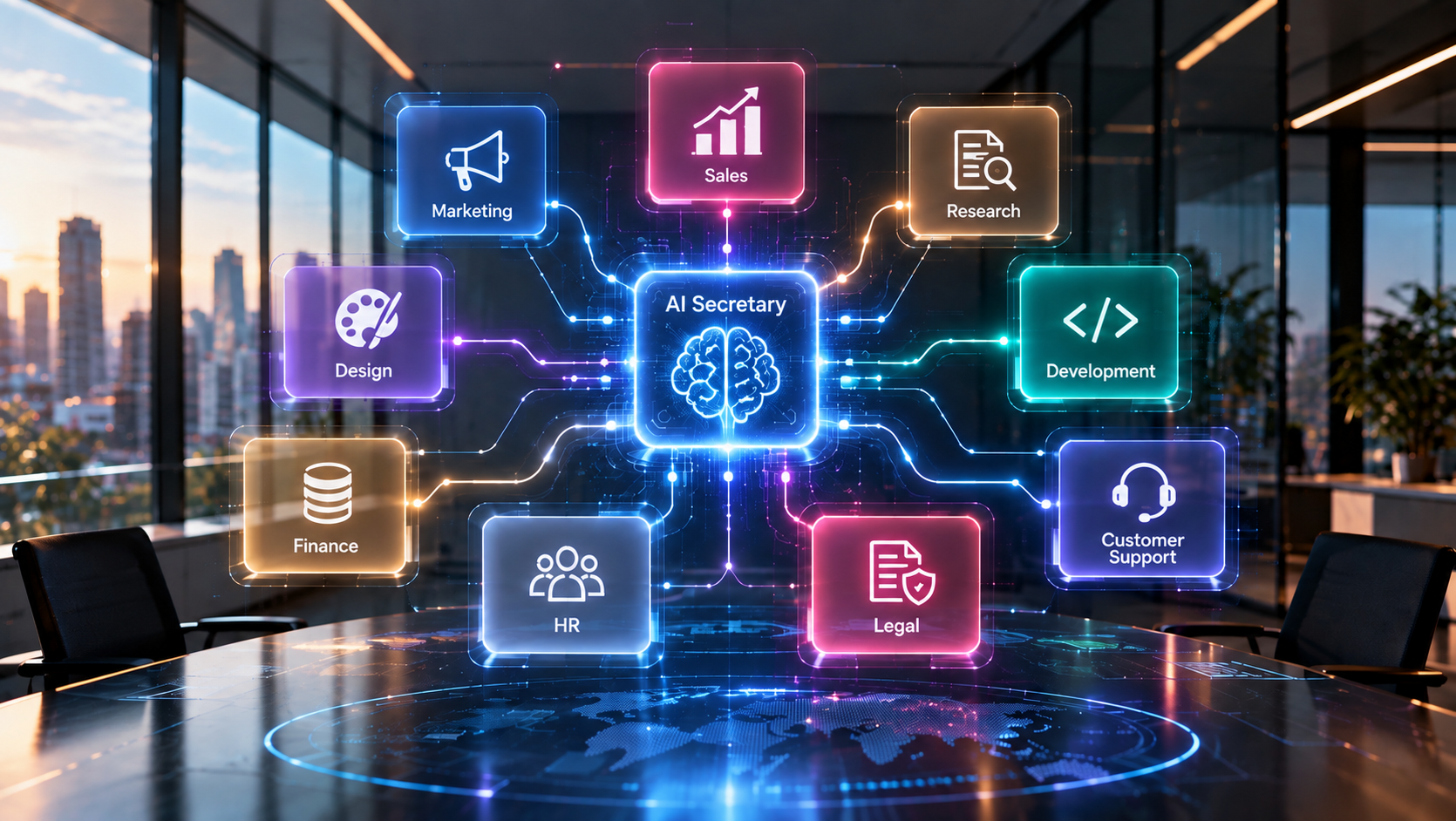
The AI secretary helps organize the request and route the work. Department AI handles the work according to its area, while worker AI supports the execution.
The structure gives each AI a place within the larger workflow instead of treating every task as a separate conversation.
Organizing AI Around Real Business Work
The value of an organizational structure becomes clearer when a task involves more than one type of work.
A business request might require research, content development, design, or analysis. Rather than treating each activity as an isolated AI interaction, SAKINA CLAW is designed to coordinate specialized AI roles around the work.
For example, a request related to a marketing initiative could involve marketing, research, and design capabilities.
Each area can contribute according to its role.
This is one of the ideas behind an AI team: multiple specialized AI capabilities working within an organized structure rather than one AI being expected to handle everything.
AI as Part of the Working Environment
This approach also changes where AI sits in the workplace.
With individual AI use, an employee decides when to open an AI tool and how to work with it.
With an organizational AI structure, AI can be positioned within the company’s existing functions.
Sales, marketing, research, development, design, finance, HR, and other departments can have AI capabilities aligned with their respective work.
SAKINA CLAW also supports customizable roles, prompts, and workflows so the AI organization can be structured around the company’s requirements.
The important part is the organization around the technology.
AI becomes connected to responsibilities and business functions instead of existing separately from them.
From AI Tools to AI Teams
There is a significant difference between having access to AI and having an organized AI workforce.
A collection of AI tools gives employees capabilities they can use when needed.
An AI team introduces structure: roles, responsibilities, coordination, and a way for different AI capabilities to contribute to a larger piece of work.
That is the model SAKINA CLAW is built around.
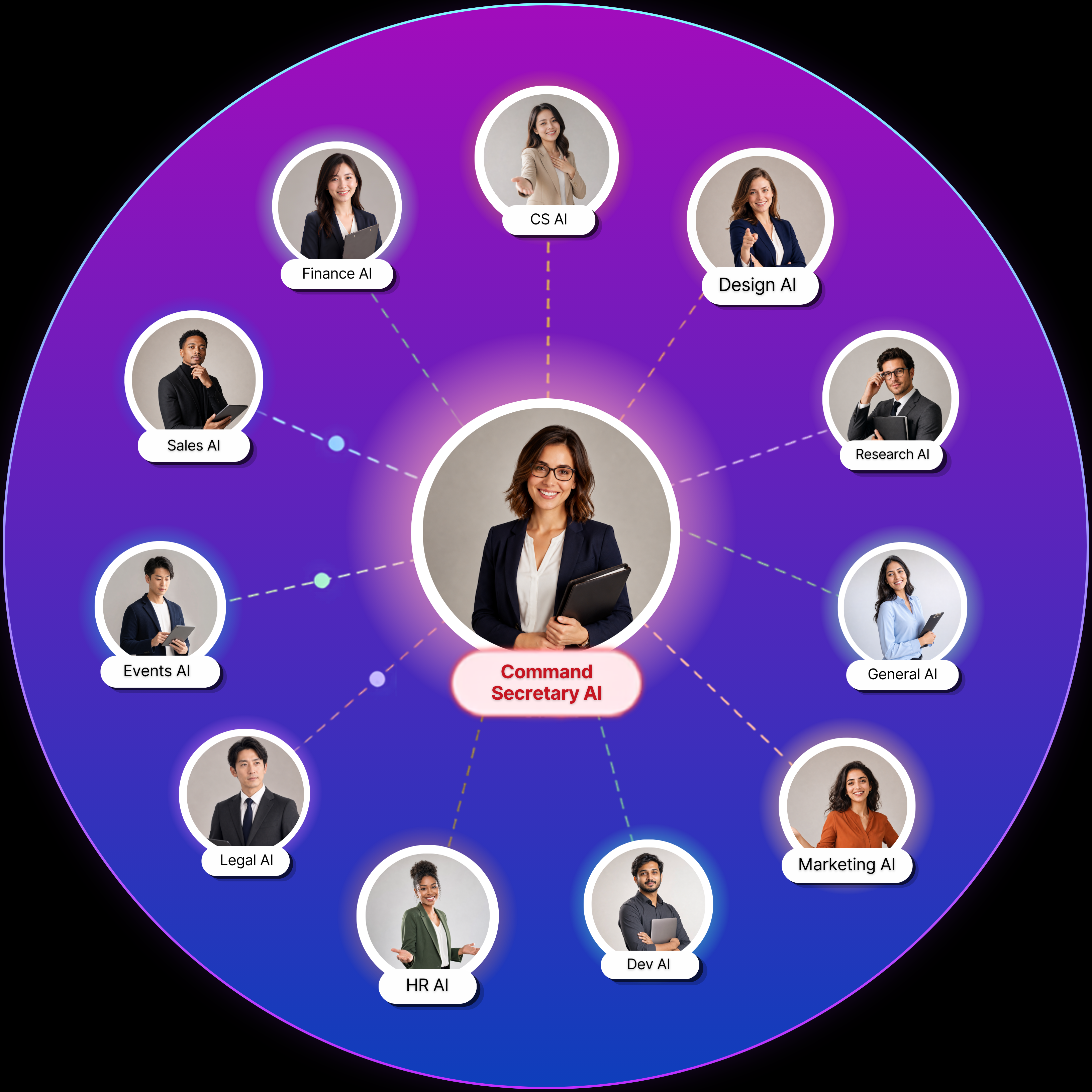
Its AI secretary/PM can organize requests, specialized department AI can handle different areas of work, and worker AI can support execution. The platform is designed to coordinate these roles as part of one AI organization.
It is less about adding another AI tool to the company’s software stack and more about creating a structure for how AI participates in business operations.
Building an AI Organization
The way companies use AI is still evolving.
For some, AI remains an individual productivity tool. For others, it is becoming part of broader workflows and business operations.
SAKINA CLAW represents the latter approach.
Rather than giving every employee the same AI experience, it organizes AI around roles, departments, and business work.
The result is an environment where AI can take on different responsibilities and work as part of a larger organizational structure.
From using AI individually to organizing AI collectively.
That is the idea behind SAKINA CLAW.
About SAKINA CLAW
SAKINA CLAW is findout’s AI Organization OS, built around AI secretaries/PMs, specialized department AI, and worker AI to support coordinated business work.